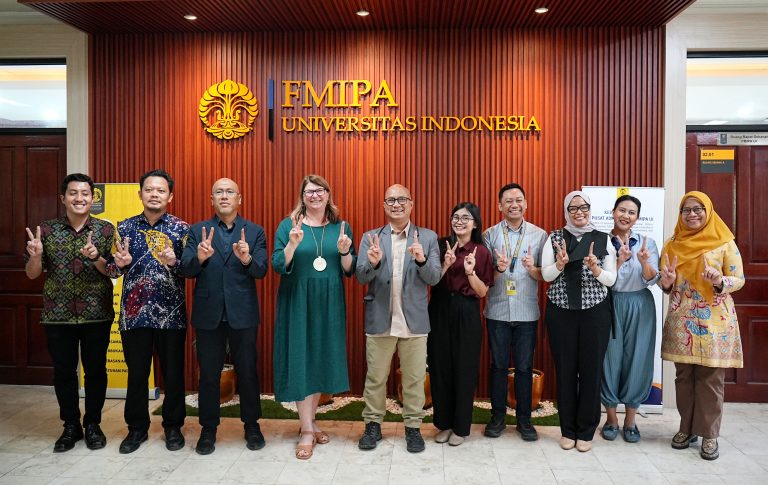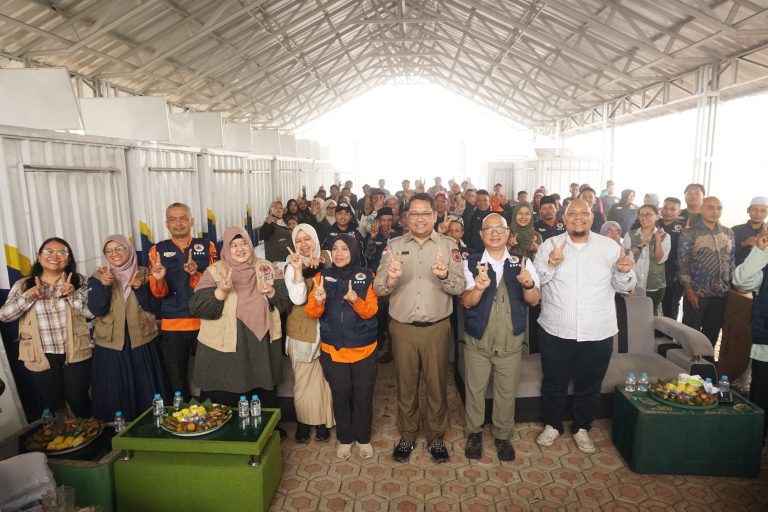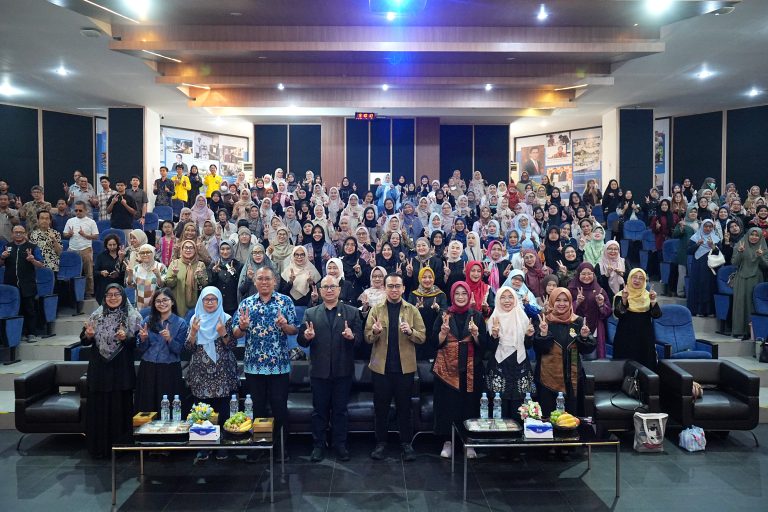


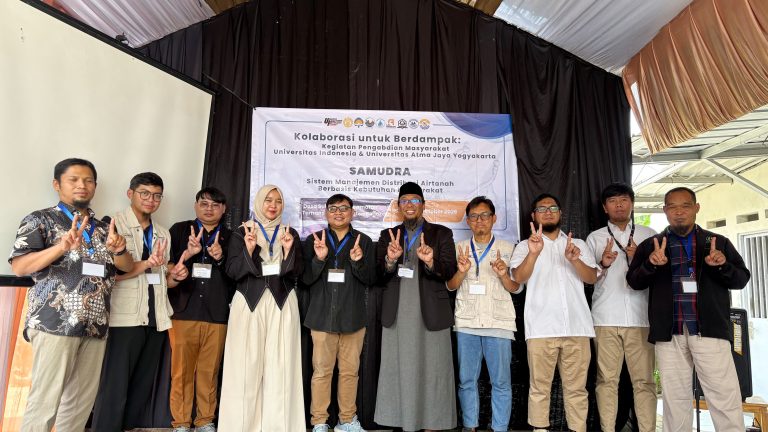
Depok, November 10, 2026 – Sustainable access to clean water is one of the essential needs of communities, particularly during the dry season. In response to this challenge, Universitas Indonesia (UI), through its Community Service Program (Pengmas) SAMUDRA (Community Needs-Based Groundwater Distribution Management System), seeks to strengthen groundwater storage, management, and distribution systems in Kp. Kemang, RW 010, Sukaluyu Village, Bogor Regency, West Java.
Held on Saturday, October 31, 2026, the program was a collaboration between FMIPA UI, Atma Jaya Yogyakarta University, LAZ Rabbani, the Bantu Air Indonesia Foundation, and the local community. Taking place in the Kp. Kemang RW 010 neighborhood and at An-Nuur Mosque, the event was attended by approximately 75 participants, including the organizing team, partner representatives, and members of the Sukaluyu Village community.
The SAMUDRA program was initiated in response to the community’s need for more reliable access to clean water throughout the year. Previously, efforts to establish a water supply had been initiated by LAZ Rabbani in collaboration with the Bantu Air Indonesia Foundation through the drilling of a clean water well, the construction of a water shelter, and the development of an independent community water supply system (PAM Mandiri) as the primary water source for residents around An-Nuur Mosque. However, the potential decline in water availability and discharge during the dry season requires preventive measures. One possible solution is to expand water storage capacity.
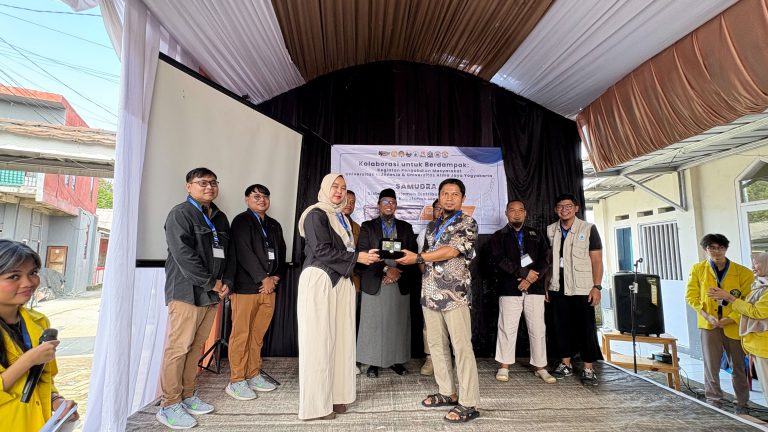
The Head of the FMIPA UI Community Service Team, Dr. Isnaini Rahmawati, a lecturer at the Department of Chemistry, FMIPA UI, explained that SAMUDRA was established to continue and strengthen the water supply initiatives previously undertaken by its partners. According to her, sustainable access to water depends not only on the availability of water sources but also on well-planned storage, management, and distribution systems.
In its implementation, SAMUDRA focuses on three main activities: increasing water (storagecapacity), developing and disseminating Standard Operating Procedures (SOPs) for the independent community water supply system (PAM Mandiri), and conducting water quality assessments. These three components are designed to support water availability while enhancing the community’s capacity to manage water resources independently.
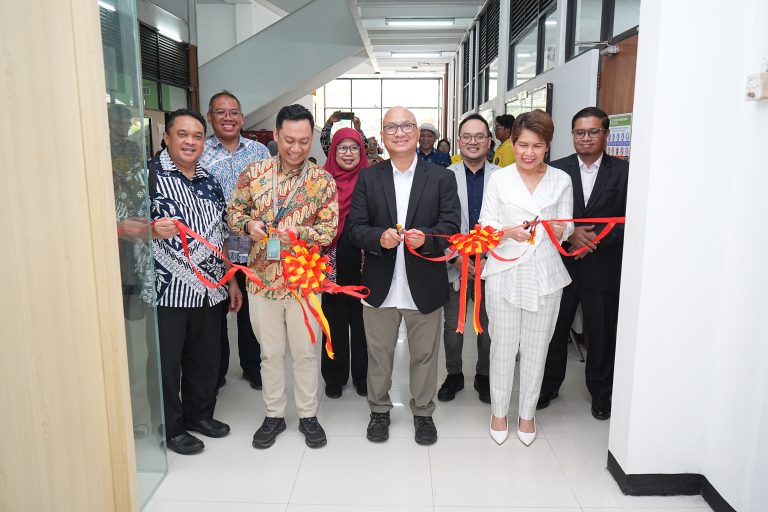
The event began with an opening session and remarks from representatives of the UI team, partner organizations, and the local community. This was followed by a symbolic handover of technological support to the beneficiaries in the form of facilities and materials to help expand the capacity of the main water storage infrastructure, including paving block and sifted sand. This support was intended to strengthen the existing water storage infrastructure within the community.
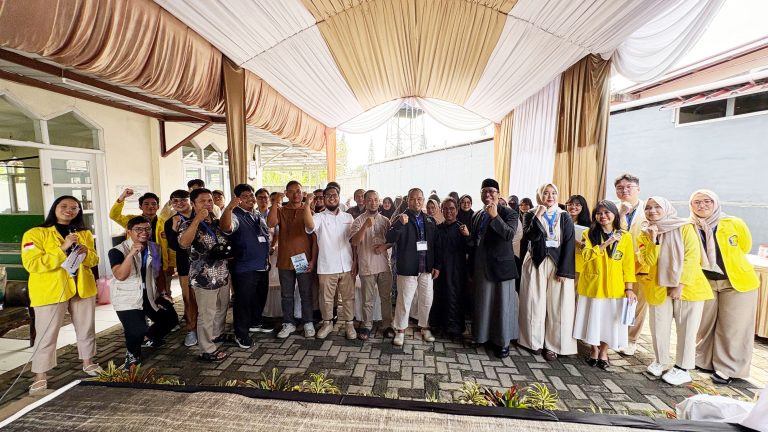
The program continued with a seminar on hydrogeology and groundwater management delivered by Hastomo Prasetyo, S.T., Founder of the Bantu Air Indonesia Foundation. During the session, community members gained insights into groundwater source conditions, water availability processes, and water utilization and distribution systems to meet daily needs.
In the following session, Ir. Twin Yoshua Raharjo Destyanto, S.T., M.Sc., Ph.D., a lecturer in Industrial Engineering at Atma Jaya Yogyakarta University (UAJY), presented material on SOPs for PAM Mandiri. Together with two UAJY Industrial Engineering students, Alfonso Matthew Jaya and Jaybin Gilbert Santoso, he introduced operational guidelines for managing PAM Mandiri, developed by the UAJY team in the form of a booklet. These guidelines are expected to serve as a reference for the community in operating the system and managing water distribution in a more structured manner.
Meanwhile, Dr. Isnaini Rahmawati, M.Si., presented material on water quality and the results of water quality assessments. Community members were introduced to various water quality parameters, covering physical, chemical, and microbiological aspects. The assessment was conducted on filtered water to provide an overview of its quality based on the parameters tested. Through this activity, the community is expected to gain a better understanding of the importance of water quality testing before water is used.
Representatives of the Mosque Prosperity Council (DKM) and PAM Mandiri, Ust. Dr. Deddy Muhammad, M.A., and a representative of the RW 10 community, Mr. Andy Wirata, expressed their appreciation for the implementation of the SAMUDRA program. They considered the program particularly timely, as residents continue to face challenges in accessing water during the dry season. Support for expanding water storage capacity, accompanied by education on groundwater sources, distribution systems, and water quality, is expected to help the community manage available water resources more effectively.
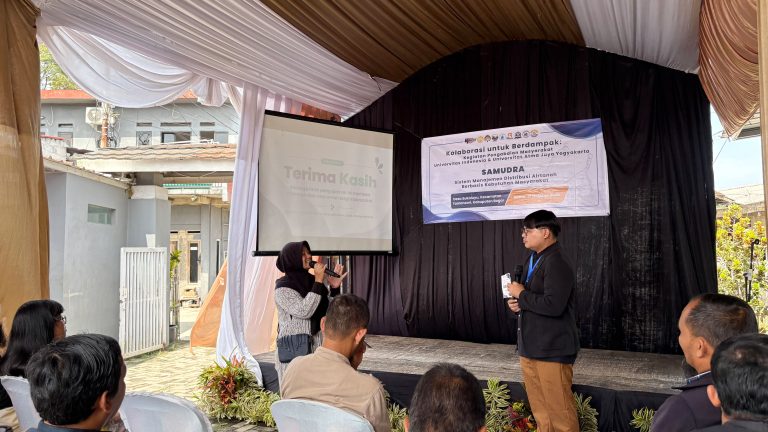
Through discussion and question-and-answer sessions, the organizing team and community members also explored various challenges related to water resource utilization, PAM Mandiri operations, and the sustainability of local distribution systems. These discussions provided an opportunity for residents to express their needs while strengthening their involvement in collective water management.
Dr. Isnaini expressed her hope that collaboration among universities, partner institutions, and the community would continue, enabling water resource management in Sukaluyu Village to become more effective, independent, and sustainable.
Through SAMUDRA, FMIPA UI and its partners seek to deliver a community service approach that goes beyond providing physical infrastructure by also strengthening community capacity and knowledge-based governance. The synergy between infrastructure development, education, and community empowerment is expected to establish a strong foundation for more responsible groundwater management and support sustainable access to clean water for the residents of Sukaluyu Village, particularly in Kp. Kemang, RW 010.